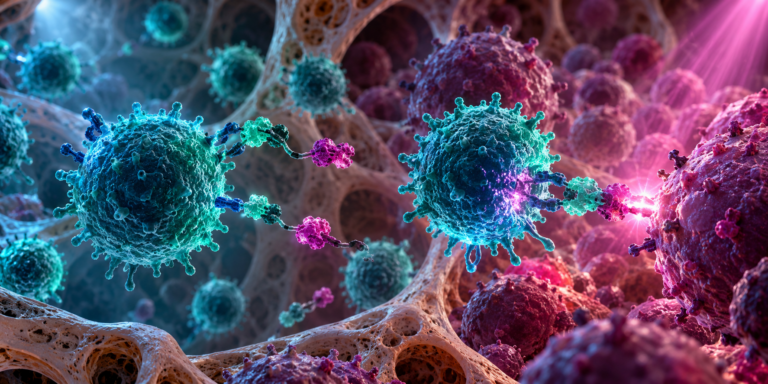
Wave – WVE-006 RNA Editing Update

Summary

Wave Life Sciences reported positive updated data from the RestorAATion-2 study of WVE-006, demonstrating substantial restoration of functional alpha-1 antitrypsin protein and significant reduction of toxic mutant protein in Alpha-1 Antitrypsin Deficiency (AATD).

What Happened

Wave announced updated clinical data showing WVE-006 achieved an MZ-like phenotype across both biweekly and monthly dosing regimens.

In the 200 mg biweekly cohort, wild-type M-AAT represented 64% of total circulating alpha-1 antitrypsin while harmful Z-AAT levels were reduced by 71%.

The company highlighted durable pharmacodynamic effects and continued support for its AIMer RNA-editing platform.

Deep Analysis

This is one of the strongest RNA-editing platform signals of 2026.

WVE-006 demonstrates the growing maturity of programmable oligonucleotide editing technologies beyond traditional RNA silencing approaches.

Rather than simply suppressing expression, the therapy effectively shifts protein composition toward functional wild-type alpha-1 antitrypsin while reducing toxic mutant accumulation.

Achieving an MZ-like phenotype is particularly meaningful because individuals with heterozygous MZ status often have substantially milder disease biology compared with ZZ patients.

Strategically, this positions Wave at the intersection of several high-value technology layers: RNA editing, GalNAc delivery, precision oligonucleotide therapeutics, and genetic liver disease.

The broader significance extends beyond Alpha-1 disease. Success here strengthens confidence that RNA-editing oligonucleotides may eventually compete with or complement gene-editing approaches such as CRISPR and base editing.

This also intensifies competition in programmable genetic medicine, where multiple modalities are now converging on similar diseases using different technological architectures.

Company / Product Background

Wave Life Sciences is a biotechnology company focused on stereopure oligonucleotide therapeutics and RNA editing.

Alpha-1 Antitrypsin Deficiency is a genetic disorder caused by mutations in the SERPINA1 gene leading to accumulation of toxic misfolded Z-AAT protein and deficiency of functional alpha-1 antitrypsin.

WVE-006 is a GalNAc-conjugated RNA-editing oligonucleotide designed to restore production of functional M-AAT protein while reducing toxic mutant Z-AAT expression using Wave’s AIMer editing platform.

Signal Extraction

– RNA editing emerging as major therapeutic modality
– Functional protein restoration becoming key differentiation point
– GalNAc delivery continues validating liver-targeted oligo platforms
– Competition intensifying across programmable genetic medicine

Insilens Take

– Opportunity: RNA editing could become a scalable alternative to permanent gene editing
– Threat: Competitive pressure from CRISPR and base-editing platforms
– Watch Signal: Durability and long-term clinical outcomes
– Action: Compare RNA editing reversibility versus permanent genomic editing

Share this article :

Leave a Reply

Your email address will not be published. Required fields are marked *